
The Importance of Regenerative Farming
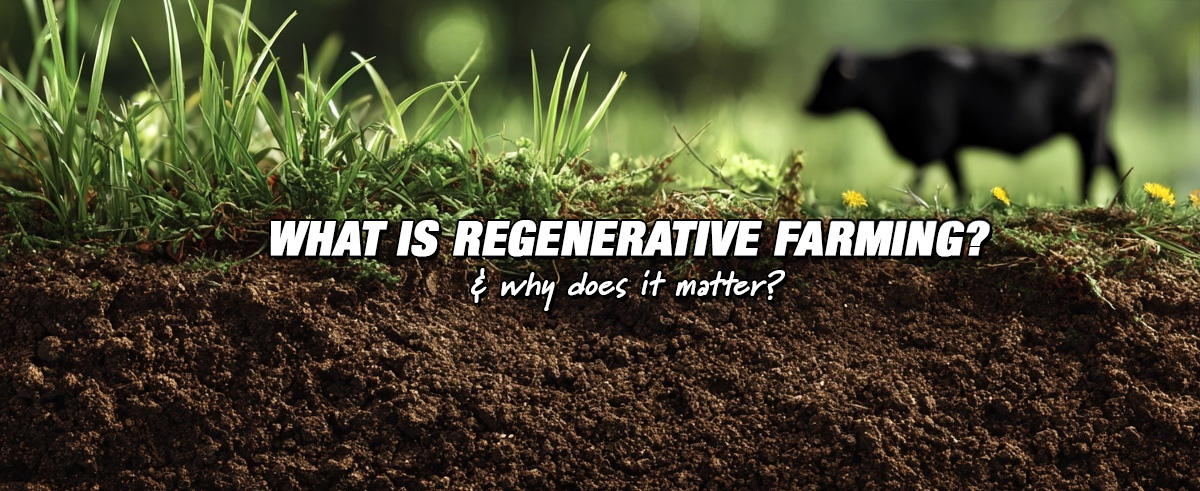
What Is Regenerative Farming & Why Does It Matter?
Thanks to eco-conscious people like you, there’s a greater sense of awareness from food lovers who want a superior product that’s ethically sound. We’re seeing a shift in shoppers’ vocabulary, with phrases like grass-fed and grass-finished, free-range chicken and wild-caught seafood becoming more common. But what about the practices that support ethical farming and supplies?
More and more, people want to dig deeper, wanting to know about how farms are run, and how sustainable their practices are in the long term. That’s where regenerative farming comes in.
So, what is regenerative farming? In simple terms, it’s a way of farming that heals the land as it produces food. Instead of treating the land and animals like separate parts of the process, regenerative farming brings them all together. The goal is renewal by building healthier soils, supporting biodiversity, and creating farming systems that can last for generations.
The Principles of Regenerative Farming
There isn’t a strict rulebook, but regenerative farming follows a few guiding ideas, all with the same aim: healthier land, healthier animals, and healthier food.
Soil comes first. Farmers working this way focus on building it up, not stripping it down. Covering crops, composting, and rotational grazing feed nutrients back into the earth, which means better pastures for cattle, sheep, and poultry to thrive on. Diversity plays its part too. A mix of grasses, plants, and animals keep the system balanced, with each one helping the other grow.
Tilling, the breaking up and turning over of soil, is kept to a minimum. Too much tilling releases carbon, weakens soil, and harms organisms like earthworms that keep the soil alive. Managed grazing, on the other hand, uses livestock as part of the cycle. Cattle move across fields, fertilising naturally. Chickens follow, pecking at bugs and scratching the surface. It’s farming that treats animals as partners in the process, not just products.
It’s slower, yes, but it leaves the ground richer, the animals healthier, and the food better. That’s exactly why at ButcherCrowd, we choose to work with farmers who follow these practices. The results are simply better for everyone.
How Regenerative Farming Benefits the Environment
Healthy soils mean more than green paddocks. Soil with strong organic matter holds water in dry times, reduces runoff in heavy rain, and keeps nutrients cycling where they belong. That makes farming more resilient, and it also means animals grazing on those pastures are eating nutrient-rich grasses, which translates into higher quality meat for you.
Another benefit is carbon storage. Well-managed pastures act as natural carbon sinks, helping pull carbon from the air and locking it underground. That’s good for the planet, but also good for farming families who want to keep their land productive for generations to come.
And then there’s biodiversity. When you move away from monoculture farming, the land comes back to life. More insects, more birds, more plants. All of them are part of a stronger ecosystem. Farmers can step back from heavy chemical use, animals graze in cleaner environments, and consumers get food raised in a way that respects natural balance.
For us, that’s the real strength of regenerative agriculture. It doesn’t just sustain. It restores. And when you buy from ButcherCrowd, you’re backing farmers who put animals, land, and people first, so you get meat and seafood that’s better from start to finish.
Regenerative Farming Produces Healthier Soils and Better Animal Welfare
Grass-fed beef raised on diverse pastures is naturally richer in beneficial nutrients such as omega-3s, CLA, and antioxidant vitamins. Free-range chicken and pasture-raised pork benefit in the same way, producing meat with better texture and taste. Many of our customers have shared with us that they notice a richer flavour and firmer texture from the meat they receive.
They’ve also told us they feel good about supporting farmers who care about their livestock and the final product sold. Regenerative farmers are upfront about their methods, because their whole approach is about care; for the soil, for the animal, and for the people who eat the food.
The Future of Regenerative Agriculture in Australia
In Australia, farmers across the country are experimenting with regenerative agriculture as they respond to droughts, erosion, and changing climates. Some start with small steps like rotating crops or grazing patterns. Others overhaul their entire approach. What they all have in common is a focus on leaving their land stronger than they found it.
And consumers are part of this shift. Every time you choose meat or seafood from regenerative systems, you’re encouraging more farmers to make the move. At ButcherCrowd, we’re proud to work with partners who raise grass-fed and grass-finished beef, pasture-raised chicken and pork, and who source seafood with the same commitment to ethics and sustainability.
The future of farming in Australia isn’t just about bigger yields. It’s about balance: healthy soils, thriving ecosystems, and food that’s honest from start to finish.
Regenerative farming matters because it’s good for the land, good for the animals, and good for the food on your plate. By choosing ButcherCrowd, you’re both supporting regenerative agriculture in Australia, plus you’re backing a food system that cares about more than the next harvest. You’re choosing a better way forward.
Join a community that backs better farming. With ButcherCrowd, enjoy grass-fed beef, pasture-raised meat, and wild-caught seafood, delivered to your door.
ButcherCrowd is better
BETTER FOR THE FARMING & FISHING FAMILIES, THE ANIMALS, THE ENVIRONMENT AND BETTER FOR YOU. A BETTER WAY OF EATING MEAT.
SKIP, PAUSE OR CANCEL ANYTIME


