
Wild-Caught vs Farmed Fish
Wild-Caught vs Farmed Seafood: What’s the Difference and Why Are More Consumers Choosing Wild?
Why are more consumers choosing wild-caught salmon and seafood, and what does research suggest about its nutritional profile and sourcing?
Interest in seafood sourcing has grown as more consumers look closely at how their food is produced, what it eats and how it fits within broader dietary and nutritional preferences.
Seafood is widely recognised as a nutrient-dense protein source that can support heart health, brain function and overall wellbeing when included regularly in a balanced diet. When comparing wild-caught and farmed seafood, many consumers focus on differences in feeding patterns, natural lifecycle and fatty-acid composition.
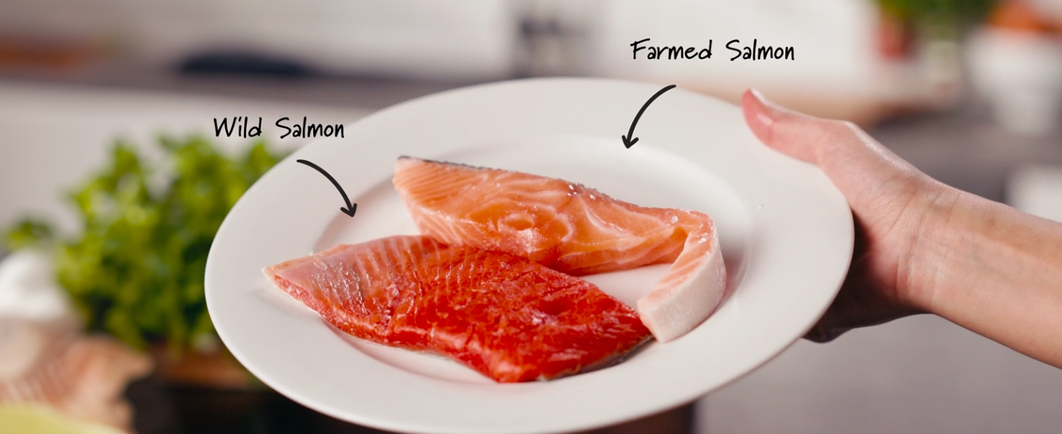
Wild-caught seafood is harvested from natural ocean ecosystems, while farmed seafood is raised in controlled aquaculture environments. These differences can influence nutritional composition, sourcing transparency and overall perception among consumers.
Wild-Caught Seafood: Natural Lifecycle and Nutritional Characteristics
Wild fish grow and feed within natural marine ecosystems, consuming plankton, krill and smaller fish as part of the ocean food chain. This natural feeding pattern can influence fatty-acid composition and has been examined in nutrition research exploring marine omega-3 sources and whole-food dietary patterns.
Wild-caught seafood can provide:
-
Long-chain omega-3 fatty acids (EPA and DHA) 🧠
-
High-quality complete protein 💪
-
Vitamin D and B-group vitamins ☀️
-
Selenium and iodine ⚖️
Wild oily fish such as salmon, sardines and mackerel are widely recognised in nutrition research as among the richest natural sources of marine omega-3 fatty acids. These nutrients have been associated with cardiovascular, neurological and metabolic health in population-level research.
Omega-3 and Omega-6 Balance: A Key Nutritional Difference
Nutrition research frequently examines the balance between omega-3 and omega-6 fatty acids. Modern dietary patterns may be relatively higher in omega-6, which has increased interest in foods that may provide a more favourable fatty-acid balance.
Comparative fatty-acid analyses have reported that wild salmon often demonstrates a more favourable omega-3 to omega-6 ratio than many conventionally produced salmon samples. Feed composition in aquaculture can influence overall fatty-acid balance, sometimes shifting total fat composition compared with wild counterparts.
A more balanced omega-3 to omega-6 profile has been associated with anti-inflammatory dietary patterns. Nutritional composition can vary by species, region, season and feeding conditions, and individual results may differ.
Why Many Consumers Prefer Wild-Caught Seafood
-
Natural Marine Lifecycle 🌊 — Wild fish grow and feed within natural ocean ecosystems, which may align with preferences for minimally altered food systems.
-
Favourable Fatty-Acid Profile ❤️ — Wild oily fish can provide long-chain omega-3 fatty acids and may demonstrate a favourable omega-3 to omega-6 balance.
-
Nutritional Composition Considerations 🧬 — Research has reported that feed composition in aquaculture can influence fatty-acid balance and fat levels.
-
Transparency and Traceability 🔍 — Wild-caught seafood is often labelled by species, catch location and harvest method.
-
Taste and Culinary Performance 🍽️ — Wild seafood is often described as having a firmer texture and distinctive flavour.
-
Supporting Fishing Communities ⚓ — Wild fisheries can contribute to employment and regional economic activity.
-
Dietary Alignment 🥗 — Wild-caught oily fish can provide omega-3 fatty acids and micronutrients that may support balanced dietary patterns.
Why ButcherCrowd Focuses on Wild-Caught Seafood
ButcherCrowd includes wild-caught seafood as part of its focus on traceable, responsibly sourced protein. Wild-caught salmon, white fish and prawns are supplied frozen to help preserve quality and nutritional integrity. Providing portioned seafood options may help households include fish consistently within weekly meal planning.
General Information
This article is provided for general educational purposes only. Nutritional composition can vary by species, region, season and preparation method. Individual dietary needs may differ, and those with specific health or dietary concerns should consult a qualified professional.
References & Sources
-
National Institutes of Health — Omega-3 Fatty Acids
https://ods.od.nih.gov/factsheets/Omega3FattyAcids-HealthProfessional -
Harvard T.H. Chan School of Public Health — Omega-3 & Inflammation
https://www.hsph.harvard.edu/nutritionsource/omega-3-fats -
USDA FoodData Central — Salmon Nutrient Composition
https://fdc.nal.usda.gov -
Peer-Reviewed Review — Fatty Acid Composition of Wild vs Farmed Salmon
https://www.ncbi.nlm.nih.gov/pmc/articles/PMC3746113 -
Simopoulos, A.P. — Omega-6/Omega-3 Ratio and Health
https://www.ncbi.nlm.nih.gov/pmc/articles/PMC3335257 -
Journal of Food Composition & Analysis — Salmon Nutrition Research
https://www.sciencedirect.com -
Cleveland Clinic — Fish Nutrition & Health
https://health.clevelandclinic.org
Healthline — Wild vs Farmed Salmon Nutrition Comparison
https://www.healthline.com/nutrition/wild-vs-farmed-salmon
ButcherCrowd is better
BETTER FOR THE FARMING & FISHING FAMILIES, THE ANIMALS, THE ENVIRONMENT AND BETTER FOR YOU. A BETTER WAY OF EATING MEAT.
SKIP, PAUSE OR CANCEL ANYTIME


