
How to Cook A ButcherCrowd Beef Brisket
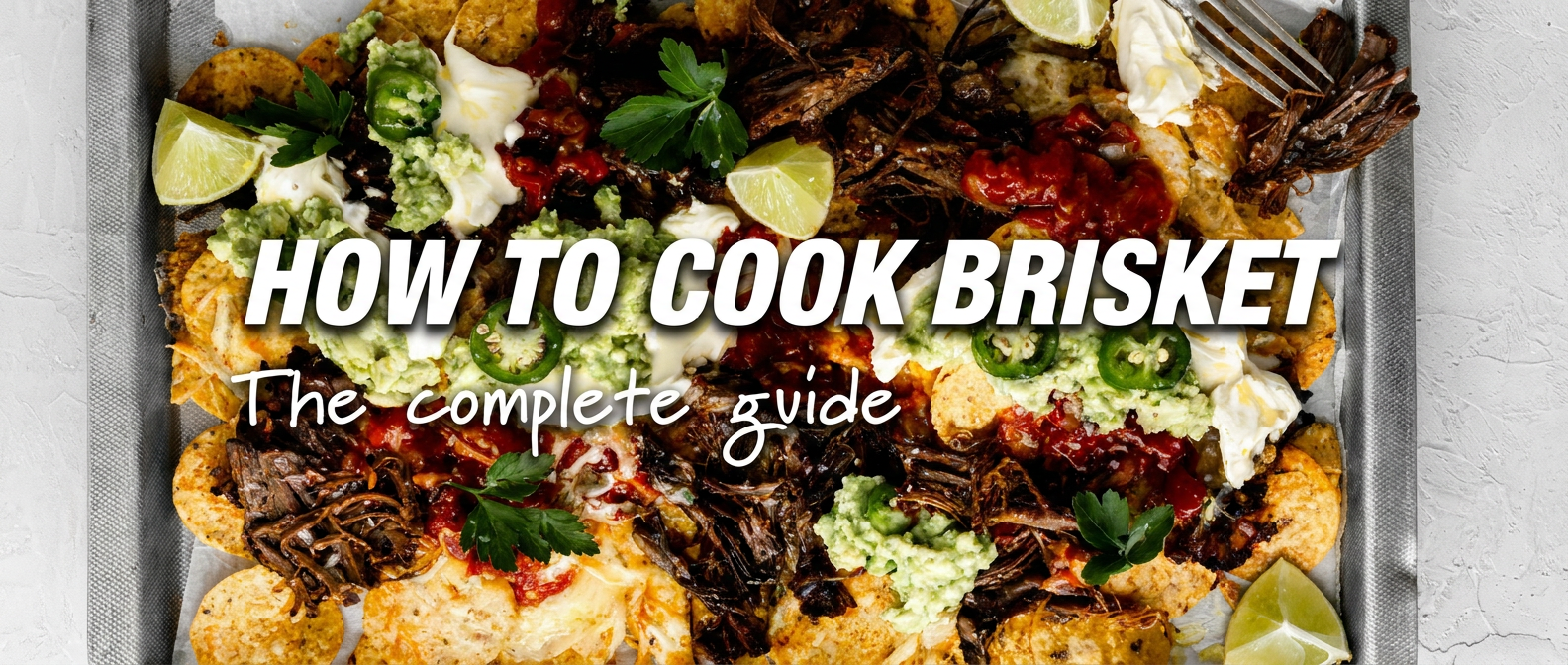
How to Cook ButcherCrowd Beef Brisket — The Complete Guide
Brisket is one of the most rewarding cuts you can cook, and one of the most unforgiving if you rush it. Done right, it can produce thick slices with a crackling bark on the outside and deep, gelatinous tenderness within. Done wrong, it's dry, tough, and chewy. The difference comes down to understanding what brisket actually is, and respecting the time it needs.
ButcherCrowd's beef brisket comes in at approximately 700g — a perfect size for a first cook, a weeknight low-and-slow, or a project that will genuinely impress. This guide covers everything: the cut, the prep, cooking methods for every setup, the science of the stall, how to slice it, and why starting with quality grass-fed and finished beef makes the whole thing worth doing.
Understanding the Cut
Brisket comes from the chest of the cow, which is a heavily worked muscle that carries significant connective tissue and collagen. This is precisely why it responds so well to low-and-slow cooking: the collagen breaks down into gelatin over time, basting the meat from within and producing that signature melt-in-the-mouth texture.
A whole brisket consists of two distinct muscles:
The flat — the leaner end, a rectangular section with a uniform thickness and a fat cap on top.
The point — the fattier end, with far more marbling and intramuscular fat.
At 700g, ButcherCrowd's brisket is a beautifully manageable cut — easy to handle, consistent in thickness, and ideal for home cooking across all the three methods below.
Preparing Your Brisket
Good brisket starts before it ever touches the heat.
Trim the fat cap to roughly 6–8mm. Enough to protect the meat during the cook and render down into flavour, but not so thick it insulates poorly. Remove any hard, waxy fat because it won't render.
The rub is the foundation of the bark. The benchmark is a simple Dalmatian rub: equal parts coarse kosher salt and coarse black pepper, applied generously. The coarser the grind the better, as fine salt dissolves too quickly and prevents a proper crust from forming. For more depth, add garlic powder, onion powder, and a little smoked paprika. Apply the rub the night before and leave the brisket uncovered in the fridge overnight to dry-brine.
Let the meat come up towards room temperature before cooking. A cold brisket placed straight on heat extends the cook time and causes uneven cooking.
Because ButcherCrowd's brisket is 100% grass-fed and grass-finished, it can sometimes be leaner than the grain-fed alternatives – so take care not to overtrim the fat cap.
Cooking Methods and Temperatures
The Smoker (Recommended for Flavour)
Set your smoker to 107–121°C. Place the brisket fat side up. Smoke unwrapped until the internal temperature reaches approximately 74°C.
At a 700g flat, expect a total cook time of around 3–4 hours at this temperature.
Expect a stall. Around 65–77°C, the internal temperature will plateau and stop rising — sometimes for an hour or more. This is caused by evaporative cooling as surface moisture offsets the heat input from the smoker, it’s not a sign anything has gone wrong.
At the stall you have three options:
-
Wait it out: maximises bark development
-
Raise the smoker to 135°C: shortens the stall
-
Texas crutch: wrap tightly in butcher paper or foil to stop evaporation and push the temperature upward
Continue cooking until the internal temperature reaches 93–96°C. A probe or skewer should slide in with almost no resistance.
The Oven (Reliable and Accessible)
Set your oven to 130–150°C. Place the brisket fat side up on a rack in a roasting pan. Add approximately 1 cup of liquid (beef stock, red wine, or water) to the base — not touching the meat. Cover tightly with foil.
For a 700g cut at 140°C, plan for approximately 2.5–3.5 hours covered, then remove the foil for the final 30 minutes to build some surface bark.
Target internal temperature: 93–96°C.
The Slow Cooker (Low-Effort, High Reward)
For weeknight cooking, a slow cooker is hard to beat. You lose the bark, but the tenderness is excellent.
Sear the brisket in a hot pan for 3–4 minutes per side first — this adds colour and flavour the slow cooker cannot provide on its own. Add sliced onion, garlic, a little smoked paprika and cumin to the base, place the brisket on top, and pour stock around it.
Set to low and cook for 6–7 hours for a 700g cut. Slice against the grain, or shred with two forks and return the meat to the cooking juices to stay moist.
The Science: Why Low and Slow Works
Brisket is high in collagen, the protein that can make cuts so tough. Under sustained heat and moisture, collagen undergoes hydrolysis: it breaks down into gelatin, which coats the muscle fibres and produces that distinctive richness and mouth-feel. This process begins properly above 71°C and accelerates with time.
Rushing the cook with high heat denatures the proteins before collagen can fully convert, leaving the meat fibrous and dry even if the internal temperature reads correctly.
ButcherCrowd's grass-fed and finished brisket is slightly denser in connective tissue than some grain-fed equivalents — which means there \can often be more collagen available to convert into gelatin over the cook. It also carries higher levels of omega-3 fatty acids and CLA (conjugated linoleic acid) compared to grain-fed alternatives, nutrients that are largely preserved through low-heat cooking methods.
Resting and Slicing
Resting is non-negotiable for the smoking method. After hitting target temperature, rest the brisket wrapped for at least 45 minutes to 1 hour before cutting. This allows the muscle fibres to relax and the gelatin to redistribute. Cutting in too early causes the juices to run onto the board instead of staying in the meat.
Slicing against the grain is what separates tender, easy-to-chew brisket from a plate of chewy rope. Use long, smooth strokes at approximately 6mm (¼ inch) thickness — about the width of a pencil. Every slice should show some bark on the edge.
Why Sourcing Matters
ButcherCrowd sources 100% grass-fed and grass-finished beef from verified Australian farms across Australia — all of which comply with the NEVER EVER Program, which is Certified Humane and prohibits the use of antibiotics and hormones for growth promotion.
Grass-fed and finished from this program are raised on open pasture year-round, producing a more nutrient dense meat, with the collagen-rich connective tissue that makes slow-cooked brisket so rewarding. It is a fundamentally different product to what you find vacuum-packed on a supermarket shelf — and that difference can really shine in the cook.
Shop ButcherCrowd Beef Brisket 700g →
The information in this article is for general educational purposes only and does not constitute medical or nutritional advice. Please consult a qualified health professional for personalised dietary guidance.
References
-
Jamie Geller — The Butcher's Guide to Choosing the Perfect Brisket: https://jamiegeller.com/guides/the-butchers-guide-to-choosing-the-perfect-brisket/
-
Hey Grill Hey — Brisket Rub Recipe: https://heygrillhey.com/brisket-rub/
-
The Flying Wombat — How to Smoke Beef Brisket: https://www.theflyingwombat.com.au/beer-recipes/how-to-smoke-beef-brisket
-
The Grilling Science — BBQ Stall Explained: https://thegrillingscience.com/guides/bbq-stall-explained/
-
A Place 2 Meat — How Long to Cook Beef Brisket: https://aplace2meat.com.au/how-long-to-cook-beef-brisket-a-guide-for-every-method/
-
Native Angus Beef — Nutritional Benefits of Grass-Fed Beef: https://nativeangusbeef.com.au/blogs/news/what-are-the-top-5-nutritional-benefits-of-grass-fed-beef
ButcherCrowd is better
BETTER FOR THE FARMING & FISHING FAMILIES, THE ANIMALS, THE ENVIRONMENT AND BETTER FOR YOU. A BETTER WAY OF EATING MEAT.
SKIP, PAUSE OR CANCEL ANYTIME


