
Grass-Fed vs Grain-Fed: What’s the Difference in Taste & Cooking?
Grass-Fed vs Grain-Fed: What’s the Difference in Taste & Cooking?
If you’ve ever picked up a pack of beef and found yourself squinting at the label trying to make sense of it, you’re not alone. Grass-fed vs grain-fed terms get tossed around a lot, but the details behind those terms aren’t always clear. And beyond the labels, there’s what really matters - how the beef tastes and cooks in your kitchen.
Regardless of whether you’re shopping for a midweek meal or planning a weekend BBQ, it’s worth knowing what kind of beef you’re working with, how it was raised, and how that translates on the plate.
What Does Grass-Fed Beef Mean?
When people talk about grass-fed beef, they’re usually referring to cattle raised on a natural pasture diet. These animals eat grass and forage throughout their lives. That’s basically it. No grain, not even in the final weeks. We call that “grass-fed and grass-finished.”
It’s not just about diet, either. The way these animals are raised (outdoors, grazing freely) means they live in a way that supports both their well-being and the land they roam on.
The farmers we work with don’t push them to grow faster. They work with the rhythm of the land. They set their own prices, too, which keeps the whole system more sustainable and fair for both farmers and cattle alike.
What Does Grain-Fed Beef Mean?
While grain-fed beef typically starts the same way as pasture-raised cattle, the major difference occurs when they are moved to feedlots at a certain age. That’s when their diet changes. The main reason for this is to speed up their ideal weight and fat cover compared to grass finishing, which takes longer. Corn, soy, and other grains are used to speed up growth. This helps farmers hit target weights faster and grain-fed beef typically develops more marbling.
The process is efficient for farming production, but the animal’s confined conditions and grain diet is not ideal for their digestive system and overall wellbeing.
Taste & Texture Differences Between Grass-Fed and Grain-Fed
Let’s talk about flavour. The grass-fed vs grain-fed taste conversation comes down to personal preference, but once you know what you’re looking out for, the real differences become obvious.
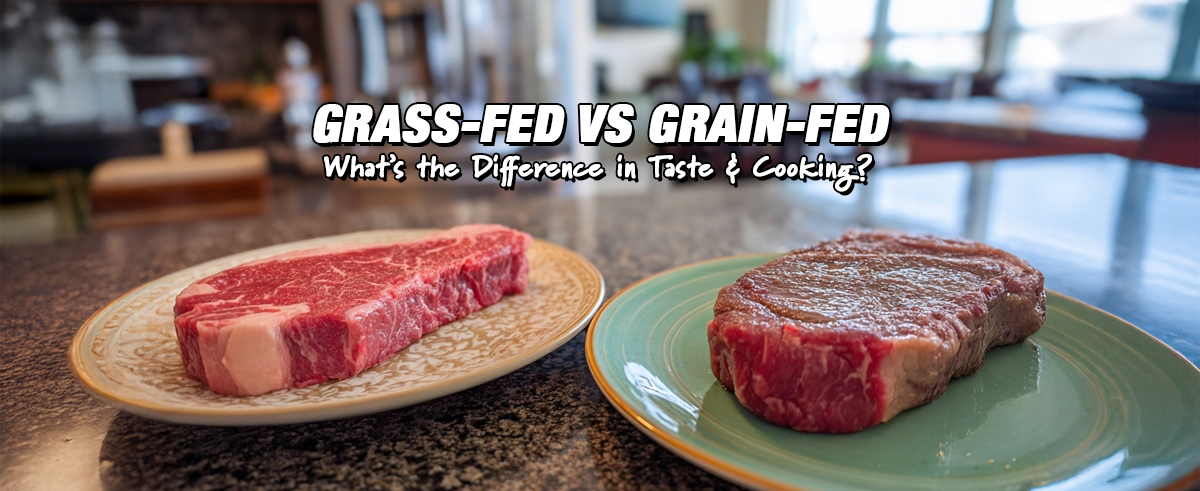
Beef from grass-fed cattle tends to carry more of the land with it. The flavour can be deeper, sometimes slightly earthy, occasionally described as having a mineral edge. It’s not as fatty, so you get a firmer bite. For folks who grew up with supermarket beef, the difference is immediate, with many not going back to supermarket sourced beef.
Grain-fed beef can be softer and milder in taste, given the difference in diet cattle consume through grain. Some people describe the taste as being on the bland side, needing more seasoning compared to the grass-fed beef variety.
How Farming Methods Affect Cooking Techniques
Grass-fed beef, with less marbling, can cook differently and often benefits from lower, slower methods. You can still sear it over high heat, but you’ll need to keep a careful eye over it. Letting the meat rest after cooking helps keep it juicy. And if you’re roasting or slow-cooking, low and slow is the way to go.
Some like to marinate their grass-fed cuts to bring out the depth of flavour. A knob of butter or a quick rub of herbs can work just as well.
Grain-fed beef, thanks to its higher fat content, allows for a longer cooking time without drying out. It can be roasted at higher temps, or thrown straight onto a flaming hot BBQ and it’ll hold up fine. It’s straightforward, which is part of its appeal, especially in restaurants where kitchen staff need to get large quantities of meals out to patrons quickly, with little fuss.
Which One Should You Choose?
While taste is personal, there are clear reasons why more people are choosing grass-fed and grass-finished beef, and sticking with it. The difference between grass-fed and grain-fed isn’t just about flavour or fat content. It’s about how the animal lived, how the land was treated, and what kind of food ends up on your plate.
Grass-fed beef doesn’t rely on shortcuts. These animals roam freely, eating the diet nature intended. The result is a cut of meat that reflects care, patience, and a farming system built on respect; for the animal, the farmer, and the environment.
Grain-fed beef might offer a familiar texture, but it often comes from feed lots that focus on speed and uniformity over welfare and sustainability. It’s convenient, sure, but convenience rarely tells the full story.
At ButcherCrowd, we’ve made our choice. We only offer grass-fed and grass-finished beef because we believe it’s better. Better for you, better for the animal, and better for the planet. Our farmers raise their cattle ethically, and we blast freeze shortly after processing to lock in peak freshness and quality. You can customise your box, adjust deliveries, or even skip a week if needed, for the ultimate in convenience .
When you choose grass-fed, you’re not just picking a cut of meat. You’re backing a better way to eat.
ButcherCrowd is better
BETTER FOR THE FARMING & FISHING FAMILIES, THE ANIMALS, THE ENVIRONMENT AND BETTER FOR YOU. A BETTER WAY OF EATING MEAT.
SKIP, PAUSE OR CANCEL ANYTIME


