
The Hidden Crisis in Australia’s Meat Industry
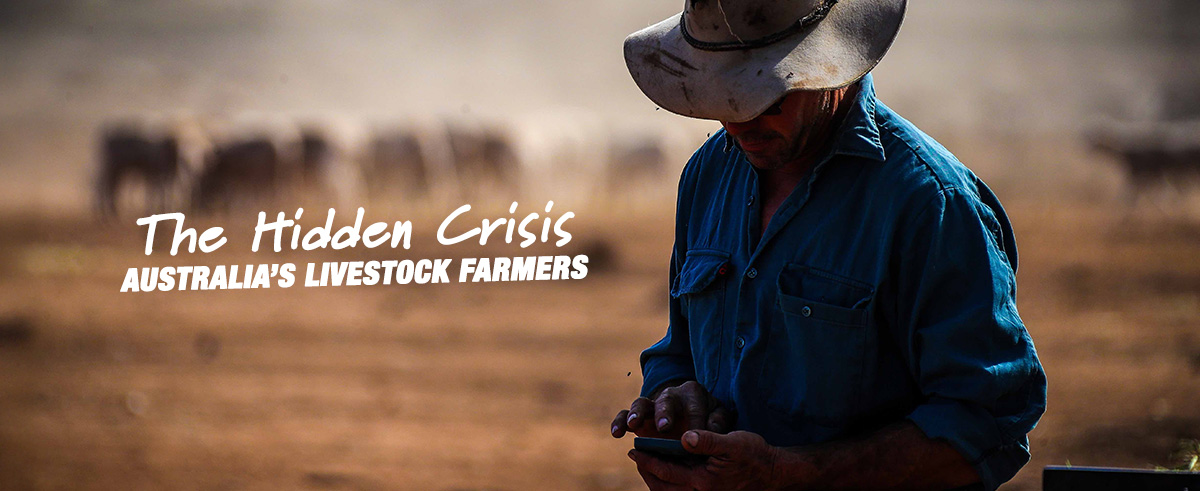
Australia’s Meat Industry is in Crisis
While consumers pay more for beef and lamb at the checkout, the farmers who raise and supply that meat are seeing their real incomes shrink, their costs soar, and their futures placed in jeopardy. This is not the case in many other countries, where more competitive markets and better policy support allow livestock producers to thrive.
In Australia, the root of the problem is a supermarket monopoly that squeezes producers, distorts prices, and threatens the very existence of family farms.
It’s a system that leaves hardworking farmers holding the short straw. As the shelves fill up with neatly packaged cuts of beef, lamb, and pork, it’s easy to forget the generations of knowledge, care, and sacrifice that go into raising that food. But behind every steak is a farmer, and for too many of them, the future is looking bleak.
Wages and Incomes: A Downward Spiral
Average cash incomes for specialist beef farms dropped by 66% in 2023–24, falling to just $65,000 per farm—60% below the 10-year average in real terms. Sheep meat producers have been hit even harder, with many running at a loss in the same period.
This isn’t just a number—it’s a gut punch to the families who pour their lives into the land. Imagine working harder than ever, only to see your income slashed by two-thirds. That’s the reality for Australian beef farmers.
Meanwhile, input costs for meat producers have risen sharply—fertiliser up 156%, diesel up 40%, and labour costs among the highest in the world. It’s like running a marathon while someone keeps moving the finish line further away. Even as farmers struggle to cover these costs, the prices they receive for their livestock have dropped by 15% below the 10-year average in real terms.
Farmers’ real wages have not kept pace with inflation, and the ratio of prices received to prices paid has been in decline since 2020–21, eroding profitability and making it harder for new generations to enter the industry.
For young Australians dreaming of a life on the land, the message is clear: the system is stacked against you.
The Global Picture: Australia Left Behind
Australian meat producers face higher labour and processing costs than many competitors. For example, beef processing costs are 24% higher than in the US, and more than double those in Brazil.
In Europe and some Asian countries, farmgate shares of the retail price are higher and government support is stronger, helping producers weather market fluctuations and maintain viable businesses.
It’s like Australia’s farmers are trying to compete in a game where the other teams get a head start—and a helping hand—while we’re left to fend for ourselves. The global market rewards efficiency, but our system makes it harder, not easier, for farmers to compete.
The Supermarket Monopoly: Squeezing the Lifeblood from Farms
A supermarket monopoly controls more than two-thirds of Australia’s grocery market and over half of the fresh meat market. This immense power allows them to dictate terms to farmers, often forcing “take it or leave it” prices for perishable goods.
It’s a lopsided playing field. Supermarkets hold the cards, and farmers are left with little choice but to accept the terms they’re given. It’s a system that rewards the powerful and punishes the producers.
Farmgate share of the retail beef price has hit 20-year lows, with supermarkets capturing a greater proportion of the final price while producers’ margins are squeezed to breaking point.
Meanwhile, retail meat prices have remained high or even increased, while the prices paid to farmers have dropped—a clear sign that the benefits of higher consumer prices are not being passed back to the people who produce the food.
Imagine paying more for a product while the person who makes it gets less. That’s the reality for Australia’s farmers, and it’s breaking the backbone of rural communities.
Generational Decline: A Broken Promise
The number of specialist beef and sheep farms has declined by a third since 1999, and the average age of a beef farmer is now 64, up from 58 in 2000. Many are forced to consider leaving the industry, unable to make ends meet or attract younger generations to take over.
The dream of passing the farm down to the next generation is fading fast. Where once there was hope for a better life built on the land, now there is uncertainty, fatigue, and a growing sense that the future is slipping away.
In previous generations, farming was a stable, community-sustaining livelihood. Today, even with record production and exports, many meat producers are struggling to survive.
Conclusion: A System Rigged Against Producers
The facts are stark. Australia’s meat producers are being crushed by a system that rewards monopoly power and punishes those who work the hardest. Supermarkets profit while farmers face ruin.
Unless this imbalance is addressed through increased competition, policy reform, and fairer pricing, Australia risks losing not only its family farms but its food security and rural communities as well. The world shows that better is possible. Here, hope is fading fast.
It’s a story of resilience in the face of overwhelming odds—a fight for fairness, for the land, and for the future of Australian agriculture. And unless we stand with the farmers who feed us, the legacy of farming in Australia may not survive the next generation.
--
Disclaimer: The information and data presented in this article are based on research and reports from third-party sources, including industry bodies, government agencies, and independent market analysts. While every effort has been made to ensure accuracy, readers are encouraged to consult the original sources for the most current and comprehensive information.
References
-
Meat & Livestock Australia (MLA), State of the Industry Report 2023-24
-
“Average farm cash income for specialist beef farms is projected to decline by 66% to $65,000 per farm in 2023–24, which is around 60% below the 10-year average in real terms.”
-
“Sheep farm cash incomes are expected to fall from $91,600 to an average loss of $23,000 per farm in 2023–24.”
-
“Input costs such as fertiliser and fuel have increased significantly, with fertiliser up 156% and diesel up 40% since 2020.”
(MLA State of the Industry 2023-24, pp. 4-5, 18-19)
-
-
Australian Competition & Consumer Commission (ACCC), Cattle and Beef Market Study, Final Report (2023)
-
“The two largest supermarket chains account for more than 65% of the retail grocery market, including fresh meat.”
-
“Farmers have little bargaining power and often must accept prices offered by supermarkets, which have increased their share of the retail price over the past decade.”
-
“The share of the retail beef price going to producers has declined to its lowest point in over 20 years.”
(ACCC Beef Market Study, Executive Summary, pp. 6, 13, 17)
-
-
National Farmers’ Federation, Submission to the 2023/24 Wage Review
-
“Agricultural wage growth has not kept pace with inflation, resulting in a decline in real wages for farm workers and owners.”
-
“Rising input costs and stagnant farmgate prices have placed significant pressure on farm profitability.”
(NFF Submission 2023/24, Sections 2.1, 2.2)
-
-
Australian Bureau of Agricultural and Resource Economics and Sciences (ABARES), Agricultural Commodities: March Quarter 2024
-
“The number of specialist beef and sheep farms has declined by about one-third since 1999.”
-
“The average age of beef farmers has increased from 58 in 2000 to 64 in 2023.”
-
“Farmgate prices for beef and sheepmeat are 15% below the 10-year average in real terms.”
(ABARES Agricultural Commodities, March 2024, Table 3, pp. 12-13)
-
-
CAINZ, Duelling Giants—Exploring Australia's Woolworths vs. Coles Duopoly
-
“Australia’s supermarket sector is one of the most concentrated in the world, with the two largest chains controlling over two-thirds of the market.”
-
“This concentration gives supermarkets immense bargaining power over suppliers, including meat producers.”
(CAINZ Article, Section: Market Concentration)
-
-
Rabobank, Beef Quarterly Q1 2024
-
“Australian beef processing costs are 24% higher than those in the US, and more than double those in Brazil.”
-
“Australian beef is often sold in Japan at a lower retail price than domestically, due to greater retail competition in Japan.”
(Rabobank Beef Quarterly Q1 2024, pp. 7-8)
-
-
Australian Bureau of Statistics (ABS), Agricultural Commodities, Australia, 2022-23
-
“The number of specialist beef and sheep farms has declined by 33% since 1999.”
-
“Average farm capital requirements have increased to $6 million per farm.”
(ABS Agricultural Commodities 2022-23, Tables 1, 4)
-
-
OECD, Agricultural Policy Monitoring and Evaluation 2023
-
“Australian agricultural subsidies account for just 2% of farm income, compared to 8% in the EU and 10% in emerging markets.”
(OECD Agricultural Policy Monitoring 2023, Table 2.1)
-
All data and quotations in this article are sourced from the above third-party research and official reports. Readers are encouraged to consult the original documents for further detail and verification.
ButcherCrowd is better
BETTER FOR THE FARMING & FISHING FAMILIES, THE ANIMALS, THE ENVIRONMENT AND BETTER FOR YOU. A BETTER WAY OF EATING MEAT.
SKIP, PAUSE OR CANCEL ANYTIME


